- Posted January 5, 2026
Hidden Grocery Benefit Found For GLP-1 Drugs
There’s a hidden economic benefit to weight-loss drugs like Ozempic and Zepbound, researchers say: Lower grocery bills for families.
Food expenses decline within six months among households with at least one person taking a GLP-1 drug, a new study says.
Spending especially drops on less-healthy options, with families forking out less cash for processed foods or fast-food meals.
“The data show clear changes in food spending following adoption” of GLP-1 drugs, lead researcher Sylvia Hristakeva said in a news release. She’s an assistant professor of marketing at Cornell University in Ithaca, N.Y.
About 16% of U.S. households have at least one person taking a GLP-1 drug, researchers said in background notes.
These findings could be good news for those families, given the steady increase in food prices over the past year.
For the study, researchers analyzed data from a market research firm that maintains a representative panel of 150,000 U.S. households. The data included the families’ food purchases and noted if someone in the household used GLP-1 drugs.
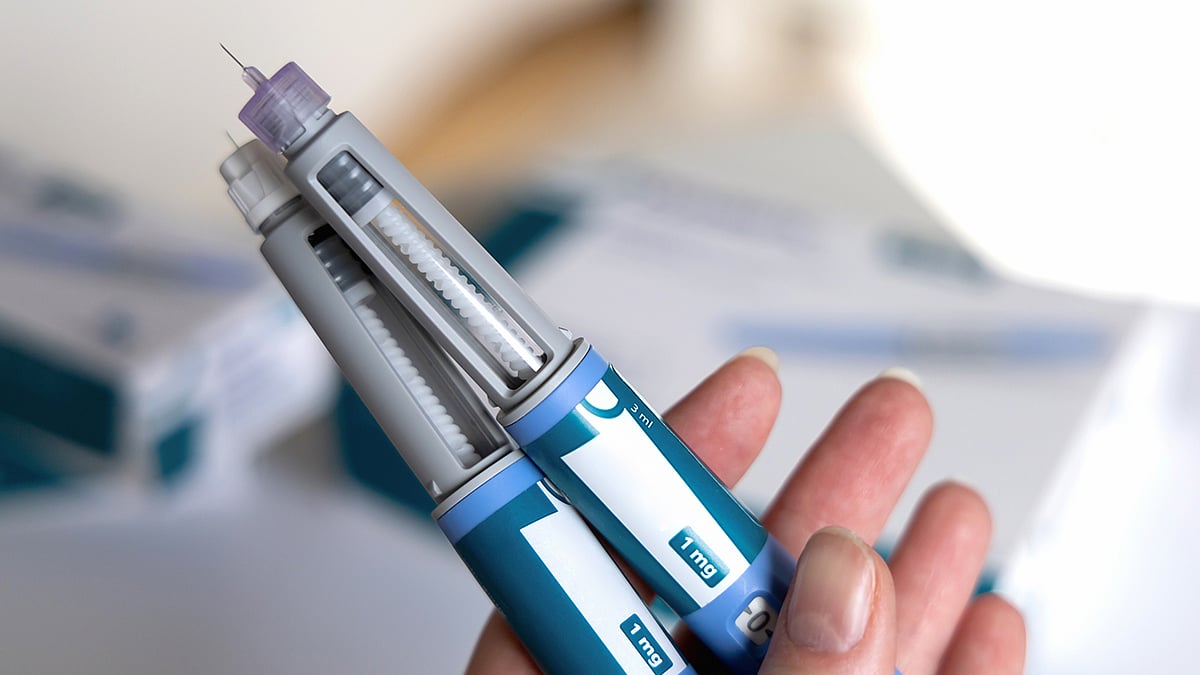
Glucagon-like peptide-1 (GLP-1) drugs mimic the GLP-1 hormone, which helps control insulin and blood sugar levels, decreases appetite and slows digestion of food. The most well-known are semaglutide (Ozempic, Wegovy) and tirzepatide (Mounjaro, Zepbound).
Results showed that grocery spending dropped by more than 5% within six months of a family member starting on a GLP-1 drug.
That amounts to an average $390 less spent on food purchases per household, out of an average annual grocery bill around $7,400.
The drop was even steeper — more than 8% — among higher-income households.
Spending on calorie-dense processed foods declined the most, researchers found. Families spent about 10% less on chips and savory snacks, nearly 9% less on sweet bakery products and nearly 7% less on cookies.
Families also visited fast-food joints and coffee shops more infrequently, with spending at those businesses declining by about 8%.
Only four food categories showed spending increases — nutrition bars, fresh fruit, meat snacks and yogurt.
“The main pattern is a reduction in overall food purchases,” Hristakeva said. “Only a small number of categories show increases, and those increases are modest relative to the overall decline.”
However, this decline in food spending appears to evaporate if a person stops taking their GLP-1 drug or adopts a lower maintenance dose, researchers said.
“After discontinuation, the effects become smaller and harder to distinguish from pre-adoption spending patterns,” Hristakeva said.
The new study appears in the Journal of Marketing Research.
More information
The Cleveland Clinic has more on GLP-1 drugs.
SOURCES: Cornell University, news release, Dec. 22, 2025; Journal of Marketing Research, Dec. 16, 2025
