Using the RefillRx mobile app? Then you will love our new, ENHANCED Sentry Drug Center mobile app.
Quickly request refills or login and manage your prescriptions on the go!
Available on both iTunes and Google Play.
Call or Visit for All of your Vaccination Needs!
Get Healthy!
- Posted February 10, 2026
Apple Watch's High Blood Pressure Alert Has Gaps Regarding Seniors, Study Warns
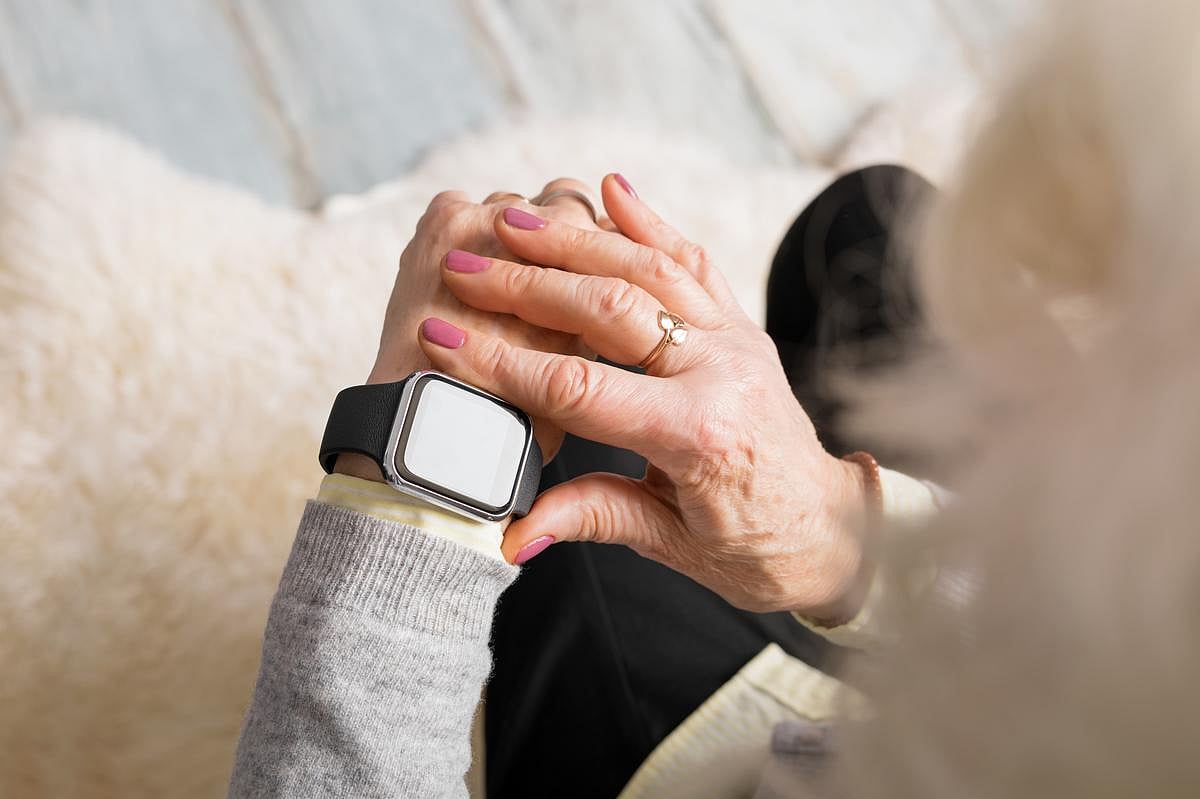
A new feature of the Apple Watch allows the device to passively track blood flow and notify users they might have high blood pressure.
However, folks who don’t receive such a warning from their smartwatch should not assume their blood pressure is healthy, a new study says.
There are critical gaps in Apple Watch high blood pressure alerts that might leave users with a false sense of security, researchers reported Feb. 9 in the Journal of the American Medical Association.
In essence, the absence of an alert should be less reassuring for seniors than for younger people, researchers found.
“With more than 200 million Apple Watch users worldwide, the Hypertension Notification Feature offers new opportunities to identify adults with undiagnosed hypertension, but with potential for hypertension misclassification as well,” concluded the research team led by Adam Bress, a professor of population health sciences at the University of Utah.
“A large proportion of individuals unaware of their hypertension may be made aware,” researchers wrote, “However, an even larger proportion of individuals with undiagnosed hypertension could receive no alert at all.”
The U.S. Food and Drug Administration (FDA) cleared the Apple Watch’s high blood pressure notification feature in September. The watch doesn’t use a traditional cuff to gauge blood pressure, but instead uses its optical sensors to track blood flow patterns.
Apple has said the watch is not intended to diagnose high blood pressure, but is designed to prompt users to see a doctor if high blood pressure is suggested, researchers said.
A validation study run by Apple found that about 59% of people with undiagnosed high blood pressure would not receive an alert, while about 8% of those without high blood pressure would receive a false alert, researchers said in background notes.
They said any increase in awareness regarding high blood pressure is a good thing, even if the method is flawed.
“High blood pressure is what we call a silent killer,” Bress said. “You can’t feel it for the most part. You don’t know you have it. It’s asymptomatic, and it’s the leading modifiable cause of heart disease.”
But to further check potential gaps in the watch’s effectiveness, researchers analyzed data from an ongoing federal study of American’s health. The team used that data to estimate how the Apple Watch alerts might highlight actual high blood pressure.
Results showed that among adults under 30, receiving an Apple Watch alert increases the likelihood that they have high blood pressure from 14% to 47%. On the other hand, not receiving an alert lowers their likelihood to 10%.
For adults 60 and older, an alert raises the probability from 45% to 81%, which makes sense given middle-aged folks, and seniors are more likely to have high blood pressure.
However, not getting an alert minimally lowers their odds of having high blood pressure, reducing it from 45% to a still-elevated 34%, researchers found.
In other words, the absence of an alert is less reassuring for seniors, researchers concluded.
The same holds for Black adults, who have a higher risk of heart disease. Receiving an alert increases the probability of high blood pressure from 36% to 75%, but not receiving an alert lowers the probability only to 26%
By comparison, an alert among Hispanic adults increases the probability from 24% to 63%, and the absence of an alert reduces the probability to 17%.
These results show that smartwatches can supplement standard blood pressure screening, but should not replace it.
“If it helps get people engaged with the health care system to diagnose and treat hypertension using cuff-based measurement methods, that's a good thing,” Bress said.
When patients get an Apple Watch blood pressure alert, Bress recommends that doctors perform “a high-quality cuff-based office blood pressure measurement and then consider an out-of-office blood pressure measurement, whether it’s home blood pressure monitoring or ambulatory blood pressure monitoring to confirm the diagnosis.”
The team plans follow-up studies to further delve into the watch’s accuracy.
More information
The American Heart Association has more on important heart health screenings.
SOURCES: University of Utah, news release, Feb. 9, 2026; Journal of the American Medical Association, Feb. 9, 2026
